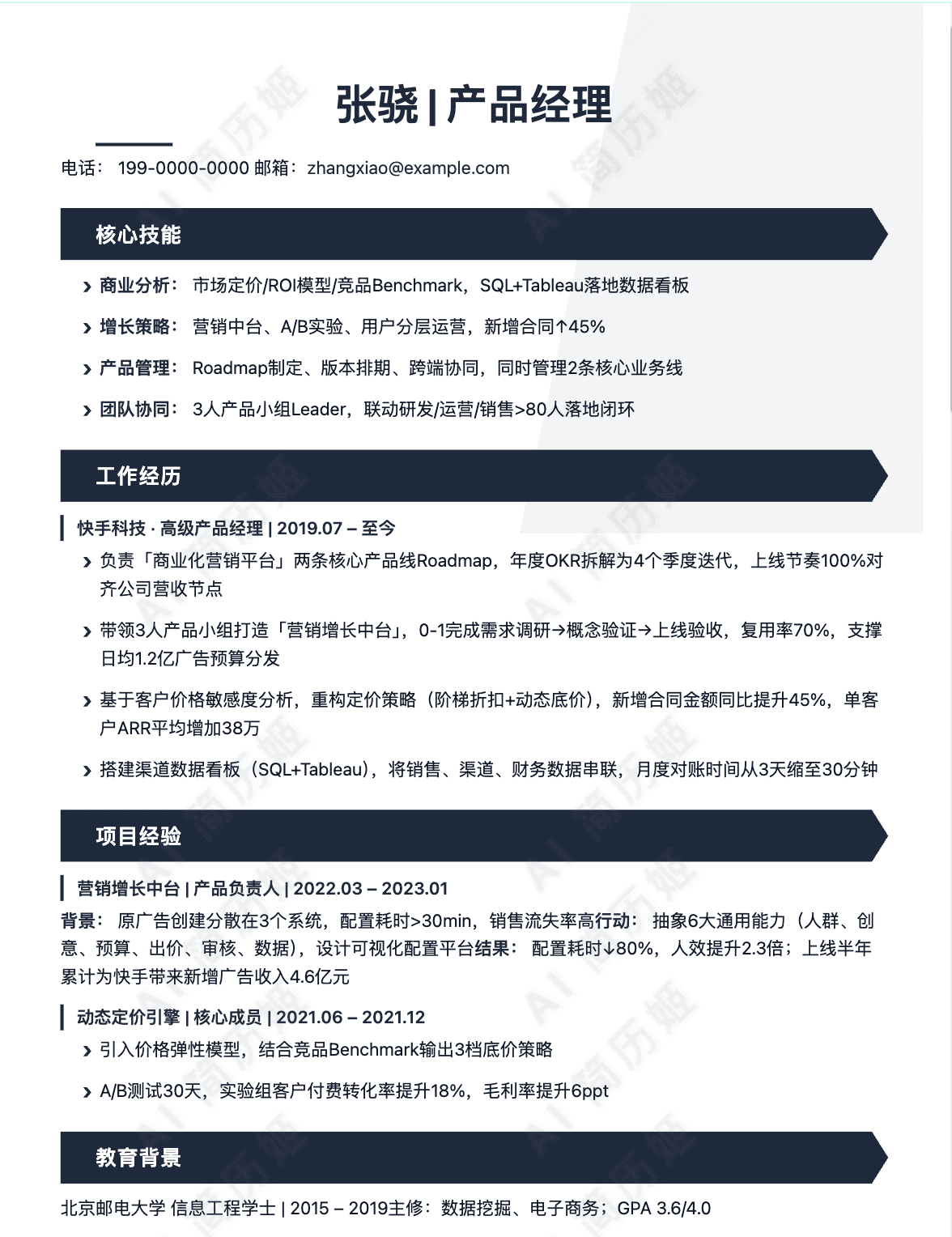
Properly Format Your Financial Analyst Resume
A meticulously formatted resume is as crucial as its content. For a financial analyst, it demonstrates your attention to detail, professionalism, and understanding of standards—qualities essential for the role. Follow these guidelines to ensure your resume makes a strong, clean impression on both human recruiters and automated systems.
Resume Length: The One-Page Standard
For early to mid-career financial analysts, a one-page resume is the expected standard. It forces conciseness and highlights your most relevant achievements. Senior analysts or those with 10+ years of diverse, significant experience may extend to two pages, but every line must justify its space. Recruiters spend seconds on an initial scan; a dense, multi-page document can obscure your key selling points.
Choosing the Right Resume Format
The reverse-chronological format is the gold standard for financial analysts. It lists your work experience starting with the most recent position, making it easy for recruiters to track your career progression and see your current skill level. Functional or combination formats, which group skills by theme, are less common and can raise red flags about employment gaps, which are better addressed directly in a chronological layout.
Font, Margins, and Spacing for Readability
Your resume must be effortlessly scannable. Use clean, professional fonts like Calibri, Arial, Georgia, or Garamond in a size between 10.5 and 12 points. Maintain consistent margins of at least 0.5 inches on all sides, with 0.75 to 1 inch being ideal. Use white space strategically between sections to create visual separation. Employ bold or slightly larger font sizes for section headers and your name, but avoid underlining or italics for large blocks of text.
File Format: Always Submit a PDF
Unless the job posting specifically requests a Word document (.docx), always submit your resume as a PDF. A PDF preserves your careful formatting across all devices and operating systems, ensuring it looks exactly as you designed it. A Word document can appear distorted if opened on a different version of the software or a different computer.
ATS Optimization Basics
Most large companies use Applicant Tracking Systems (ATS) to screen resumes before a human sees them. To pass this digital gatekeeper: use standard section headings (e.g., "Work Experience," "Education," "Skills"), incorporate keywords from the job description naturally (e.g., "financial modeling," "variance analysis," "GAAP"), avoid headers/footers, tables, text boxes, or graphics for critical content, and spell out acronyms on first use (e.g., "Generally Accepted Accounting Principles (GAAP)").
Example of a Properly Formatted Header
JANE DOE
Financial Analyst | FP&A Specialist
(555) 123-4567 | jane.doe@email.com | linkedin.com/in/janedoe | Chicago, IL
Common Formatting Mistakes to Avoid
Steer clear of these errors that can sabotage an otherwise strong resume:
One‑click format & basics check
Auto‑check contacts, links and layout; generate an ATS‑friendly header.
Write a Strong Financial Analyst Resume Summary or Objective
The opening statement of your resume is your first and best chance to grab a hiring manager's attention. A well-crafted summary or objective sets the tone, highlights your value, and encourages them to read the rest of your application.
Resume Summary vs. Resume Objective: What's the Difference?
A resume summary is a brief, powerful statement that showcases your relevant experience, key skills, and quantifiable achievements. It is best suited for professionals with direct experience in financial analysis or a related field.
A resume objective states your career goals and outlines the skills and knowledge you bring to the table. It is typically used by entry-level candidates, career changers, or recent graduates who need to frame their potential rather than their past accomplishments.
When to Use a Summary vs. an Objective
Use a summary if you have one or more years of relevant experience. Use an objective if you are new to the workforce, a recent graduate, or making a significant career pivot into financial analysis.
Key Elements to Include
Whether writing a summary or objective, incorporate these core elements: Years of experience (if applicable), core competencies (e.g., financial modeling, variance analysis, forecasting), and a clear value proposition (what you aim to achieve for the employer). Always use strong action verbs and include metrics (percentages, dollar amounts) whenever possible to demonstrate impact.
Optimal Length and Structure
Keep your statement concise and scannable—aim for 2 to 4 sentences or 3-5 bullet points. Focus on the most relevant information that aligns with the job you're applying for. Avoid generic phrases and personal pronouns like "I" or "my."
How to Tailor It to the Job Posting
Carefully review the job description and identify keywords and required skills. Mirror this language in your summary or objective. If the role emphasizes "FP&A," "three-statement modeling," and "business partnering," ensure those exact terms are featured prominently in your opening statement.
Good Examples to Follow
Bad Examples to Avoid
Generate skills list / summary
Extract hard/soft skills from the JD and create 3 summary variants.
Include Your Best Hard and Soft Skills as a Financial Analyst
A compelling skills section is a critical component of a Financial Analyst's resume. It acts as a quick-reference guide for hiring managers, showcasing your technical proficiency and professional demeanor. Effectively presenting a balanced mix of hard and soft skills demonstrates you are not only capable of performing complex analyses but also of communicating insights and driving business decisions.
Hard Skills vs. Soft Skills: The Key Distinction
Hard Skills are the technical, teachable abilities specific to financial analysis. They are often quantifiable and acquired through education, training, and certification. Soft Skills are interpersonal and behavioral traits that dictate how you work, collaborate, and solve problems. For a Financial Analyst, success hinges on the powerful combination of both skill sets: the hard skills to find the truth in the numbers and the soft skills to make that truth understandable and actionable.
Essential Hard Skills for a Financial Analyst
Your hard skills should reflect the core technical requirements of the role. Be specific with tools, methodologies, and areas of knowledge.
- Financial Modeling & Forecasting: Building dynamic, three-statement models, DCF models, and budgeting/forecasting models.
- Financial Statement Analysis: In-depth analysis of income statements, balance sheets, and cash flow statements.
- Data Analysis & Visualization: Proficiency in Excel (PivotTables, Power Query, advanced formulas), and tools like Power BI or Tableau.
- Valuation Techniques: Practical application of DCF, comparable company analysis (comps), and precedent transactions.
- ERP & Accounting Software: Experience with systems like SAP, Oracle, NetSuite, or QuickBooks.
- Programming & Data Querying: Knowledge of SQL for data extraction and familiarity with Python or R for advanced analytics.
- Corporate Finance Fundamentals: Understanding of capital budgeting, cost of capital, and financial metrics (ROI, NPV, IRR).
- Management Reporting: Creating KPI dashboards, variance analysis reports, and performance summaries for leadership.
- Regulatory & Compliance Knowledge: Awareness of GAAP/IFRS standards and relevant industry regulations (e.g., SOX).
Critical Soft Skills for a Financial Analyst
These skills translate your technical work into business impact.
- Analytical & Critical Thinking: Going beyond the numbers to identify trends, root causes, and potential implications.
- Attention to Detail & Accuracy: Ensuring data integrity and error-free models, as small mistakes can lead to significant misjudgments.
- Communication & Storytelling: Translating complex financial data into clear, concise insights for non-financial stakeholders.
- Business Acumen: Understanding how your analysis fits into the broader company strategy and market context.
- Time Management & Prioritization: Juggling multiple projects, deadlines, and ad-hoc requests efficiently.
- Collaboration & Teamwork: Working effectively with accounting, sales, operations, and executive teams.
How to Organize Your Skills Section
A categorized format is vastly superior to a simple list. It improves readability and helps recruiters quickly locate relevant skills.
SKILLS
Financial Analysis & Modeling: Financial Modeling (DCF, Three-Statement), Valuation (Comps, Precedents), Financial Statement Analysis, Variance Analysis, Budgeting & Forecasting
Data & Technology: Advanced Excel (Power Pivot, VBA), SQL, Power BI, SAP ERP, Python (Pandas, NumPy)
Professional & Soft Skills: Analytical Problem-Solving, Cross-Functional Collaboration, Executive Presentation, Detail-Oriented Reporting, Business Acumen
SKILLS
Excel, Financial modeling, Detail-oriented, Team player, PowerPoint, Analysis, Communication, SAP, Hard worker, Forecasting
Matching Skills with Job Description Keywords
Carefully review the job description and mirror its language. If a posting emphasizes "Power BI for dashboard creation" and "variance analysis," use those exact terms. This strategy passes through Applicant Tracking Systems (ATS) and shows you've tailored your application.
Job Description Asks For: "Support month-end close with variance analysis and management reporting."
Your Resume States: "Performed monthly variance analysis (actuals vs. budget/forecast) and created management reports for the leadership team, explaining key drivers of performance."
Job Description Asks For: "Experience with ERP systems (e.g., Oracle) and advanced Excel modeling."
Your Resume States: "Used software for accounting and made complex spreadsheets."
AI‑assisted bullet quantification
Rewrite bullets using STAR/metrics and auto‑fill numbers and verbs to highlight impact.
Describe Your Work Experience and Key Projects as a Financial Analyst
This section should detail your professional journey, emphasizing the impact you've made. Structure each role clearly, use strong action verbs, and quantify your achievements to demonstrate tangible value to potential employers.
Senior Financial Analyst | TechGrowth Inc. | San Francisco, CA | Jan 2021 – Present
- Challenge: The sales team lacked visibility into deal profitability, leading to aggressive discounting that eroded margins on key product lines.
- Action: Spearheaded the development of a dynamic deal desk profitability model integrating product costs, implementation resources, and post-sale support.
- Result: Empowered sales with real-time margin analysis, contributing to a 5.2% increase in gross margin for the enterprise software division within two quarters.
- Key Project – Annual Operating Plan (AOP) Process Overhaul: Led the consolidation and analysis of departmental budgets totaling $85M. Implemented a new driver-based forecasting module in Adaptive Insights, reducing the budget compilation timeline by 15 days and improving cross-departmental alignment.
- Automated monthly KPI reporting for the C-suite by building dashboards in Tableau, saving ~20 hours of manual work per month and enabling faster strategic decision-making.
- Spearheaded the development of a dynamic deal desk profitability model, empowering the sales team and contributing to a 5.2% increase in gross margin for the enterprise software division.
- Led the annual operating plan (AOP) process for $85M in departmental budgets, implementing a driver-based forecasting module that reduced the compilation timeline by 15 days.
- Automated monthly C-suite KPI reporting by building Tableau dashboards, saving 20+ hours per month of manual work and accelerating strategic reviews.
Financial Analyst | Global Manufacturing Corp. | Chicago, IL | Jun 2018 – Dec 2020
- Challenge: Monthly variance analysis was reactive and failed to provide actionable insights to plant managers, leading to consistent budget overruns in utilities and overtime.
- Action: Developed a standardized monthly operations review package with forward-looking forecasts and trend analysis for three manufacturing plants.
- Result: Provided plant managers with actionable data, identified excess utility usage patterns, and helped reduce operational variances by an average of 12% year-over-year.
- Key Project – Capital Expenditure (CAPEX) Tracking System: Designed and implemented a centralized CAPEX tracker to monitor a $25M annual budget. The system improved approval workflow transparency and enhanced post-investment ROI analysis, ensuring 95% of projects stayed within budget.
- Conducted in-depth profitability analysis by product line, leading to the strategic discontinuation of two underperforming products, which redirected resources and improved overall segment EBITDA by 4%.
- Developed standardized monthly operations review packages for three plants, providing actionable insights that reduced operational budget variances by an average of 12% YoY.
- Designed and implemented a centralized CAPEX tracking system for a $25M annual budget, improving transparency and ensuring 95% of projects stayed on budget.
- Conducted product line profitability analysis that informed the discontinuation of two underperforming products, improving segment EBITDA by 4%.
Examples of Poor Work Experience Descriptions
Avoid these common pitfalls when describing your experience. Vague, duty-focused descriptions fail to showcase your impact.
- Responsible for budgeting and forecasting.
- Did monthly reports for management.
- Helped with some financial models.
- Worked on special projects as assigned.
- My duties included looking at numbers and making spreadsheets about profits and losses to tell people how we were doing.
- I was in charge of the budget.
- I improved processes a lot.
- I did analysis on things to help save money.
- Created financial models and forecasts (e.g., P&L, cash flow).
- Prepared monthly and quarterly management reports.
- Assisted in the annual budgeting process.
- Analyzed variances and investigated discrepancies.
- I entered data into the system and made sure it was accurate.
- My boss had me pull reports and put them into PowerPoint.
- I sat in on budget meetings and took notes.
- I was promoted after one year because I worked hard.
Project experience quantifier
Split goals, actions and results; auto‑suggest metrics and format project cards.
Include Action Words to Make Your Financial Analyst Resume Pop
In a competitive job market, your resume must immediately demonstrate your value. Action verbs are the engine of your bullet points, transforming passive lists of duties into dynamic proof of your accomplishments. They are critical for both Applicant Tracking Systems (ATS), which scan for relevant keywords, and human recruiters, who look for evidence of initiative and impact. Strong action words create a vivid picture of your contributions and set you apart from candidates who rely on weak or repetitive language.
Categorized Action Verbs for Financial Analysts
Organizing your verbs by function helps you tailor your resume for specific roles. Here are key categories with powerful examples:
Leadership & Management: Directed, Spearheaded, Orchestrated, Championed, Mentored, Supervised, Governed.
Technical Implementation: Modeled, Automated, Validated, Reconciled, Consolidated, Forecasted, Streamlined.
Problem-Solving: Diagnosed, Remedied, Resolved, Corrected, Troubleshot, Mitigated, Rectified.
Collaboration: Partnered, Liaised, Aligned, Consulted, Coordinated, Facilitated, Synthesized.
Achievement & Impact: Accelerated, Amplified, Boosted, Generated, Slashed, Maximized, Optimized.
Analysis & Research: Analyzed, Evaluated, Assessed, Interpreted, Investigated, Scrutinized, Benchmarked.
Innovation: Pioneered, Engineered, Designed, Developed, Transformed, Revamped, Implemented.
Avoiding Repetition and Weak Language
Using "Responsible for," "Assisted with," or over-relying on "Analyzed" dilutes your message. These phrases are passive and focus on duties, not achievements. Instead, start each bullet point with a distinct, powerful verb from the categories above. This strategy showcases a diverse skill set and keeps the reader engaged.
Before and After: Weak vs. Strong Verb Examples
Weak: Was responsible for preparing monthly financial reports.
Strong: Compiled and disseminated monthly financial reports, providing actionable insights to department heads.
Weak: Helped with the budgeting process.
Strong: Collaborated on the annual budgeting process, modeling scenarios that influenced a 15% reallocation of resources.
Weak: Did analysis on variance.
Strong: Diagnosed budget variances and recommended corrective actions, reducing overspend by 7%.
Weak: In charge of improving a process.
Strong: Engineered an automated data consolidation process, slashing report preparation time by 10 hours monthly.
Weak: Used Excel for forecasting.
Strong: Developed a dynamic Excel forecasting model to project revenue, improving accuracy by 12%.
Examples of Strong Action Verb Usage in Context
1. Leadership & Impact: "Spearheaded a cross-functional initiative to consolidate vendor data, generating $250K in annual cost savings."
2. Technical & Problem-Solving: "Diagnosed the root cause of a recurring accounting discrepancy and implemented a control, eliminating the error."
3. Analysis & Achievement: "Analyzed historical investment data and recommended a portfolio rebalance that amplified returns by 4%."
4. Innovation & Collaboration: "Partnered with IT to pioneer a new dashboard in Tableau, streamlining KPI reporting for senior management."
3 summary versions in seconds
Combine role highlights and strengths to generate concise, confident and specific summaries.
Make Your Education Section Count
Your education section is a foundational element of your financial analyst resume. While its prominence varies with experience, its clarity and strategic detail are always crucial. Here’s how to optimize it.
Essential Information to Include
At a minimum, list your degree (e.g., Bachelor of Science), your major, the university name, and your graduation date. Use a consistent, easy-to-scan format. The graduation date can be formatted as "Month, Year" or just "Year."
Positioning: Top or Bottom?
Placement depends on your career stage. Recent graduates (0-3 years of experience) should place the Education section near the top, immediately after the summary or contact information. This highlights your most relevant qualifications. Experienced professionals with a solid work history in finance should move Education to the bottom, as your professional accomplishments now carry more weight.
Enhancing Your Entry-Level Education Section
If you are new to the field, bolster your education with details that demonstrate relevant knowledge and initiative.
Relevant Coursework: Include 3-5 advanced courses directly related to financial analysis (e.g., Financial Statement Analysis, Corporate Finance, Investment Management, Econometrics, Derivatives).
Bachelor of Business Administration in Finance
University of Example, City, State
Graduated: May 2023 | GPA: 3.7/4.0 (Magna Cum Laude)
Relevant Coursework: Advanced Financial Modeling, Securities Analysis, Financial Reporting, Econometrics, Portfolio Theory.
Honors & Awards: Dean's List (All Semesters), University Finance Scholarship.
Capstone Project: Analyzed a Fortune 500 company's 10-K, built a discounted cash flow model, and presented a buy/hold/sell recommendation to a panel of industry professionals.
GPA and Academic Honors
Include your GPA if it is strong—generally a 3.5 or higher on a 4.0 scale. You can list your cumulative GPA or your major-specific GPA if it's significantly higher. Always include notable academic honors like Summa Cum Laude, Phi Beta Kappa, or the Dean's List. Scholarships based on academic merit are also worth mentioning.
Projects and Thesis Work
A detailed academic project or thesis is a powerful substitute for professional experience. Briefly describe a relevant project, the analytical tools you used (e.g., Excel, Python, Bloomberg Terminal), and the outcome or conclusion.
Format for Experienced Professionals
For seasoned analysts, keep this section concise and focused on credentials. You can omit coursework and GPA, but do include advanced degrees and key certifications.
MBA in Finance | Prestigious University | 2015
Bachelor of Science in Economics | State University | 2010
Certifications: Chartered Financial Analyst (CFA) Charterholder, FINRA Series 7 & 63.
Common Mistakes to Avoid
Steer clear of these errors that can weaken your resume's impact.
Went to State University
Studied Business
Graduated a while ago
B.A. in Art History, Minor in Dance - University of XYZ (2008-2012) GPA: 2.8
Coursework: Intro to Business, Renaissance Art, Modern Choreography, Personal Finance 101
EDUCATION: Bachelor's Degree in Finance from Central University finished in 2022. I took some good classes and did well. My GPA was pretty good.
Masters in Financial Engineering, MIT, Expected 2024 (if not truly enrolled)
CFA Level III Candidate (if you have not registered for the exam)
Auto‑format education & certifications
Normalize titles, dates and bullets — ATS‑safe by default.
Select the Perfect Extra Sections for Your Financial Analyst Resume
While the core sections of your resume (Experience, Education, Skills) are non-negotiable, strategically chosen extra sections can be the differentiator. They provide context, demonstrate passion, and fill potential gaps, helping you craft a compelling narrative beyond your job titles.
1. Technical Projects
This section is ideal for entry-level candidates, career changers, or anyone wanting to showcase hands-on analytical prowess. Include academic, personal, or freelance projects that required financial modeling, data analysis, valuation, or programming. For each project, briefly describe the objective, tools used (e.g., Python, SQL, Advanced Excel), and the quantifiable outcome. This demonstrates initiative and applied skill.
2. Publications & Speaking Engagements
Reserved for senior analysts, thought leaders, or those in research-intensive roles. Listing a published article in a reputable journal, a well-regarded industry blog, or a presentation at a conference (e.g., CFA Institute event) establishes credibility and industry recognition. Include titles, publication/event names, and dates. This section positions you as an expert and a communicator.
3. Languages
Include this section if you are proficient in more than one language, especially if applying to global firms or roles covering international markets. Clearly state your proficiency level (e.g., Native, Fluent, Professional Working Proficiency). Fluency in a language like Mandarin, Spanish, or Arabic can be a significant asset for multinational corporations.
4. Professional Affiliations
Listing memberships in organizations like the CFA Institute, AICPA, or a local finance association shows commitment to professional development and networking. If you hold a leadership role (e.g., "Chapter Secretary"), include it. Simply being a member is still valuable, as it indicates you stay engaged with industry standards and ethics.
5. Volunteer Experience
Include volunteer work only if it leverages or demonstrates relevant skills. For example, serving as a treasurer for a non-profit, providing pro-bono financial consulting to small businesses, or mentoring students in finance. This showcases leadership, analytical application in another context, and well-rounded character. If unrelated, it's often best omitted.
Sections to AVOID on Your Financial Analyst Resume
Avoid cluttering your resume with irrelevant information that distracts from your professional narrative. Do not include:
"Hobbies & Interests": Unless directly relevant (e.g., stock market simulation games, economic podcasting), this consumes valuable space and appears unprofessional.
"References Available Upon Request": This is a given and wastes a line. Use the space for more impactful content.
An "Objective" Statement: Replace it with a powerful "Professional Summary" that highlights your value proposition immediately.
Irrelevant Early Career Jobs: For mid-to-senior roles, omit high school or completely unrelated positions. Focus on your financial career trajectory.
Personal Information: Such as marital status, birth date, or a personal photograph. This information is unnecessary in most regions and can introduce bias.
How to Format Additional Sections Professionally
Maintain consistency with the rest of your resume. Use the same font, header styles, and formatting. List items in reverse-chronological order where applicable (e.g., Publications). For sections like Projects or Volunteer Work, use bullet points with action verbs and quantifiable results, mirroring the style of your Experience section. Keep descriptions concise; the goal is to intrigue the reader, not provide a full report.
Pitfalls check
Detect formatting/wording pitfalls and suggest instant rewrites and formatting.
How to Tailor Your Financial Analyst Resume for a Specific Job Description
In competitive finance roles, a generic resume is often the quickest path to rejection. Tailoring your resume for a specific job description is not merely suggested—it's essential. It demonstrates to the hiring manager that you have the precise skills and experience they seek, significantly increasing your chances of landing an interview. This process involves strategic analysis and careful customization of your content.
Reading and Analyzing Job Descriptions Effectively
Begin by thoroughly dissecting the job description. Look beyond the job title and identify the core responsibilities, required technical skills (e.g., financial modeling, variance analysis, SQL, Power BI), and preferred soft skills (e.g., stakeholder communication, cross-functional collaboration). Pay close attention to recurring keywords and phrases, as these are often the terms scanned by Applicant Tracking Systems (ATS) and valued by the hiring team. Separate "must-haves" from "nice-to-haves" to prioritize your matching efforts.
Identifying Key Requirements and Qualifications
Create a two-column list. On one side, list the key requirements from the job description. On the other, note your corresponding qualifications, experiences, and achievements. Look for both explicit requirements (e.g., "3+ years of experience with Bloomberg Terminal") and implicit needs (e.g., "drive cost-saving initiatives" implies you should highlight quantifiable examples of reducing expenses). This exercise forms the blueprint for your tailored resume.
Matching Your Experience to Job Requirements
This is the heart of tailoring. Don't just list your duties; reframe your accomplishments to mirror the language and focus of the job description. If the role emphasizes "forecasting," ensure your bullet points highlight forecasting achievements. Use the same verbs and terminology found in the posting. Quantify your impact with metrics (percentages, dollar figures, time saved) to provide concrete evidence of your capabilities.
Customizing Resume Summary and Keywords
Your professional summary should be rewritten for each application. It's your elevator pitch, so immediately connect your top 2-3 most relevant skills to the company's stated needs. Strategically incorporate key keywords from the job description naturally throughout your summary, skills section, and work experience. This optimization helps with ATS compatibility and shows a clear alignment at first glance.
Avoiding Over-Tailoring or Misrepresenting Skills
Tailoring must be truthful. Never claim proficiency in a skill or software you lack. The goal is to emphasize relevant experience, not to fabricate it. Over-tailoring can also backfire if your resume becomes so specific that it no longer accurately represents your broader career profile. Maintain a core "master resume" with all your experiences, from which you draw and emphasize relevant items for each application.
Step-by-Step Process for Tailoring Your Resume
1. Analyze the Job Description: Highlight all skills, qualifications, and action verbs. Note the company's stated priorities (e.g., "growth," "efficiency," "M&A").
2. Map Your Experience: Compare your master resume to the highlighted requirements. Select the experiences and achievements that are the strongest matches.
3. Customize Key Sections: Revise your professional summary, skills section, and work experience bullet points. Use the employer's language and lead with your most relevant accomplishments.
Example: Generic vs. Tailored Resume Bullet
Generic: "Responsible for monthly budgeting and reporting."
Tailored for a role requiring "variance analysis and process improvement": "Performed monthly variance analysis for a $50M budget, identifying a 15% overspend in operational costs; recommended process changes that reduced the variance to under 2% within two quarters."
Common Mistakes in Resume Tailoring
Keyword Stuffing: Forcing too many keywords unnaturally into sentences, making the resume difficult to read.
Ignoring Soft Skills: Overlooking the importance of tailoring communication, leadership, or problem-solving examples to the company's culture.
One-Click Apply Mentality: Sending the identical resume to dozens of jobs without any customization.
Forgetting the Cover Letter: Not aligning your cover letter with the same tailored messaging, missing a key opportunity to reinforce fit.
Pick the right template and apply
Recommend templates by industry and seniority; auto‑map existing content.
Financial Analyst Resume Examples (Complete Samples)
Apply example in one click
Pick an example and auto‑adapt to your experience and skills.
Frequently Asked Questions (FAQ)
How long should a Financial Analyst resume be?
For most professionals, one page is ideal. If you have over 10 years of highly relevant experience, a second page may be justified. Recruiters value conciseness, so prioritize quality and relevance over length.
What's the best format for a Financial Analyst resume?
The reverse-chronological format is the standard and most preferred. It lists your most recent experience first, clearly showcasing your career progression and recent achievements, which is critical for analytical roles.
Should I include a photo on my Financial Analyst resume?
No, you should not include a photo on a resume in the US, Canada, or the UK. It can introduce unconscious bias and is considered unprofessional. Focus the space on your skills and accomplishments instead.
What are the most important technical skills to include?
Prioritize advanced Excel proficiency, financial modeling, data analysis (SQL, Python, or R), and familiarity with ERP systems (like SAP or Oracle) and BI tools (like Tableau or Power BI). These are consistently sought after.
How should I list soft skills on my resume?
Demonstrate soft skills through achievements, don't just list them. For example, instead of writing "good communication," write "Presented monthly variance analysis to senior leadership, influencing a 5% reduction in operational costs."
How do I describe my work experience effectively?
Use strong action verbs and quantify your impact. Focus on achievements like "Built a forecasting model that improved accuracy by 15%" or "Analyzed vendor spend, identifying $500K in annual cost-saving opportunities."
Should I include non-finance projects or experience?
Yes, if they showcase transferable analytical skills. A project involving data collection, analysis, and presentation of findings is valuable. Frame it to highlight relevant competencies like quantitative analysis, problem-solving, or reporting.
How do I write a Financial Analyst resume with no direct experience?
Emphasize relevant coursework, academic projects, certifications (like the FMVA), and transferable skills from other roles. Create a strong "Projects" section detailing any financial modeling, valuation, or data analysis you've performed, even in an academic setting.
Should I include my GPA on my Financial Analyst resume?
Include your GPA if it's above 3.5 and you are a recent graduate (within the last 3 years). For seasoned professionals, remove your GPA and instead highlight professional certifications and work achievements.
How many years of work history should I include?
Generally, include the last 10-15 years of relevant experience. For a Financial Analyst, early-career roles that built foundational analytical or business acumen can be included briefly, even if they exceed 15 years.
What if I'm changing careers to become a Financial Analyst?
Use a combination or functional resume format to highlight transferable skills upfront. Obtain relevant certifications (e.g., Coursera, CFI) and create portfolio projects to demonstrate technical ability. Clearly connect your past experience to analytical competencies in your summary.
How important is a resume summary, and what should it include?
A strong summary is crucial, especially for career changers or senior analysts. In 2-3 lines, state your title, years of experience, key specializations (e.g., FP&A, valuation), and 1-2 top achievements or skills to immediately capture attention.